English
Autor:
Majchrzak Grzegorz
Rok wydania:
2026
Liczba stron:
424 s.
ISBN:
978-83-8459-139-0
Tagi:
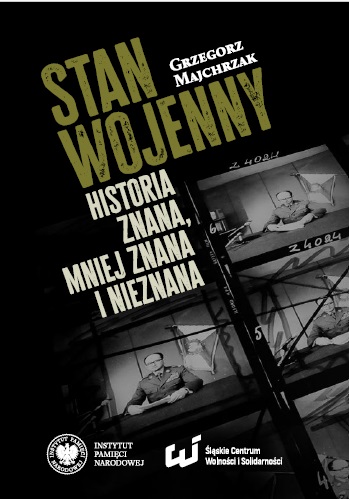
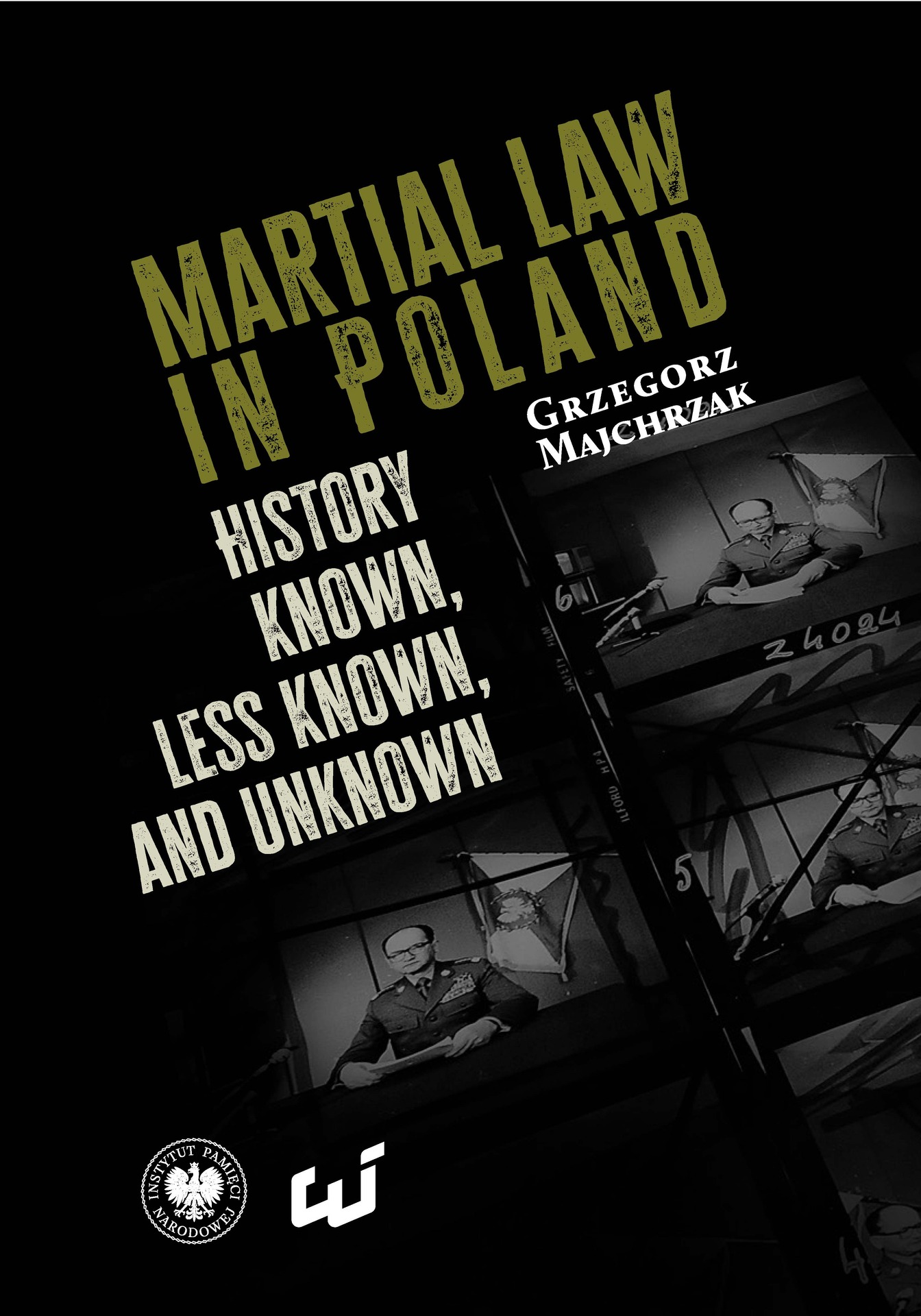
Grzegorz Majchrzak, Martial Law in Poland. History Known, Less Known, and Unknown, przekład Jerzy Giebułtowski, IPN, Śląskie Centrum Wolności i Solidarności (Silesian Centre of Freedom and Solidarity), Warszawa 2026, 424 s., ISBN 978-83-8459-139-0
On the night of December 12-13, 1981, Poland’s communist authorities imposed martial law to crush Poles’ aspirations for freedom and democracy. Tanks appeared in city streets. Telephones went dead. Tens of thousands of Solidarity activists – members of a union that counted nearly 10 million – were interned, arrested, or fired from their jobs. The main ‘architect’ of the martial law Wojciech Jaruzelski called it the “lesser evil,” a painful necessity to avert Soviet intervention. Four decades later, this interpretation still circulates widely. This book challenges it. Drawing on extensive research in the archives of the security apparatus, the military, and the communist gov- ernment, historian Grzegorz Majchrzak examines martial law in its known, less known, and unknown dimensions. He reconstructs how the decrees were adopted by a Council of State convened at midnight and then backdated and re- vised. He analyzes the regime’s anxieties over John Paul II’s 1983 pilgrimage, its efforts to manage Lech Wałęsa, and the propaganda machinery associated with government spokesman Jerzy Urban. He documents the purges of journalists, judges, and academics, as well as the forms of resistance they provoked: the doctors’ protest over the pacification of the “Wujek” coal mine, the underground Radio Solidarity, and the escapes of leading activists. Martial law in Poland prolonged communist rule by eight years and solved none of the country’s problems. This book shows how it was prepared, carried out, and remembered.